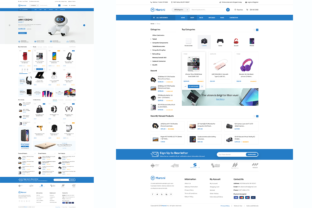
Electronics ECommerce Template: A Complete Solution for Modern Online Stores
Building an online store for electronics is a demanding task. Customers expect sleek visuals, fast navigation, and a layout that puts products front and center. The Electronics ECommerce Template provides a ready-to-use foundation that meets these expectations while saving you countless hours of design work. Whether you are launching a new business or revamping an existing shop, this template offers a professional, fully layered PSD package that works with Adobe CS5 and later. Instead of starting from a blank canvas, you begin with a framework designed specifically for electronics retail, letting you focus on what matters most: your products and your customers.
Understanding the Challenges of Building an Electronics ECommerce Site
Creating a successful electronics store involves several common difficulties. First, the visual design must feel modern and trustworthy. Shoppers associate clean layouts with reliable brands, especially when buying high-value items like laptops, headphones, or smart home devices. Second, you need flexibility. A single rigid layout rarely works for every category. Some products benefit from a grid view, while others need a list view with detailed specs. Third, the design must span the entire customer journey — from browsing categories to checkout. Fourth, you often need to integrate with platforms like WordPress, Magento, Shopify, or Prestashop. Without a design system that adapts, each platform integration becomes a separate project.
The Electronics ECommerce Template directly addresses these pain points. Its 32 layered PSD files cover homepages, shop pages, blog layouts, wishlist, compare, cart, checkout, and order completed pages. You are not left to piece together missing elements. Everything from the shop details page to the full grid view is already designed and organized. This comprehensive approach means you spend less time worrying about gaps in the user experience and more time refining your brand message.
How the Electronics ECommerce Template Addresses Key Design Needs
The template is built on a 1170px grid system with a full width of 1920px. This grid ensures that your store looks balanced on standard desktop monitors while scaling properly for larger screens. The clean and professional layout reduces visual clutter, which is critical for electronics shoppers who compare multiple products. Each PSD file is fully layered and named logically, so you can easily hide or adjust elements like navigation bars, product thumbnails, or call-to-action buttons without hunting through dozens of unnamed layers.
One of the standout features is the inclusion of vertical and horizontal menu variants. In electronics ecommerce, category depth can be significant — think smartphones, accessories, audio, wearables, and more. A horizontal menu works well for broad categories, while a vertical menu helps when you need to show subcategories without overwhelming the user. Having both options in the same template means you can test which navigation style resonates better with your audience without redesigning the entire site.
Retina readiness and free Google Fonts further enhance the template’s practicality. With retina displays becoming standard on laptops and tablets, pixel-perfect rendering is no longer optional. The template ensures sharp images and crisp text at high resolutions. Google Fonts give you typography flexibility without licensing fees, helping your store feel modern without extra cost. Free font-based icons replace generic image icons, keeping your file sizes smaller and your load times faster.
Launching a New Electronics Brand
If you are starting fresh, the Electronics ECommerce Template gives you five distinct homepage variations. You can choose one that matches your brand tone — minimal, feature-heavy, or lifestyle-focused. For a new brand that sells wireless earbuds, for example, a homepage with large product images and clean typography builds instant credibility. You can then carry that same design language into the shop category pages, making your store feel cohesive from the first click to checkout.
Expanding an Existing Store with New Layouts
Established retailers sometimes need to refresh their design without rebuilding everything. The modular nature of this template allows you to replace only certain pages. Perhaps your current product listing page uses a standard grid, but you want to introduce a list view for customers who prefer detailed specs. The separate PSD files for shop grid, shop list, and full categories let you redesign just those sections. You can keep your existing header and footer while upgrading the most high-traffic pages.
Building for Multiple Platforms
Many store owners start on one platform but later migrate to another. A PSD template that works across WordPress, Joomla, Prestashop, Magento, and Shopify gives you long-term flexibility. You are not locked into a proprietary design tool. The organized layer structure makes it feasible for a developer to convert the same design into different CMS templates. This reduces the cost and time of redesigning whenever you switch platforms.
Creating a Blog that Drives Traffic
Electronics stores benefit from content marketing — product reviews, comparison guides, and how-to articles. The included blog layout options allow you to maintain a consistent visual style between your blog and shop. When you publish a guide on “best noise-canceling headphones under $200,” the blog design reinforces the same professional look as your product pages. This consistency builds trust and keeps visitors engaged longer.
Different Approaches for Different Users
Not everyone who downloads this template will use it the same way. Understanding how different roles can leverage the Electronics ECommerce Template helps you maximize its value.
Graphic designers will appreciate the layered, well-named PSD files. They can quickly customize colors, replace images, and adjust spacing without struggling with disorganized layers. The 1170px grid system also makes it straightforward to export clean slices for web development or to hand off to a front-end developer.
Web developers can use the template as a design specification. Instead of receiving vague wireframes, they get pixel-perfect PSDs that leave little room for misinterpretation. The full width of 1920px means they understand how the design behaves at larger viewports. They can also extract icons, fonts, and grid measurements directly from the layered files.
Store owners who manage their own design might not be experts in Photoshop. However, the clean layout and organized layers make it possible to learn basic edits. Changing a background color or swapping a product image is achievable with minimal training. The template’s structure reduces the risk of accidentally breaking the design.
Digital agencies handling multiple client projects can treat this template as a reusable base. For one client, they might use homepage option three with a horizontal menu. For another, homepage option one with a vertical sidebar. The variety within the template allows agencies to deliver differentiated results without starting from scratch each time.
Examples of Effective Use and Expected Outcomes
Consider a small electronics retailer specializing in refurbished laptops. They need a design that communicates value and reliability. Using the Electronics ECommerce Template, they select a homepage that emphasizes product categories and customer reviews. The shop details page allows them to list specifications like RAM, processor, and battery life in a clear table format. The compare page enables shoppers to evaluate multiple models side by side. Within weeks, they notice reduced bounce rates and increased time on product pages because the layout makes information easy to digest.
Another example is a startup selling smart home accessories — plugs, sensors, and hubs. They need to establish a modern brand image quickly. They choose a full-width homepage with large hero images and a grid layout for new arrivals. The retina-ready design ensures their product photos look crisp on every device. The checkout page is streamlined, reducing cart abandonment. Their outcome is a faster time to market and a professional presence that competes with bigger players.
An online audio gear store uses the blog layout to post weekly reviews. They link blog posts directly to shop category pages. The visual consistency between content and commerce makes the editorial feel native. Their traffic from organic search grows, and they attribute part of that growth to a site that feels well-designed and trustworthy.
Recommendations for Getting the Most Out of the Template
To achieve the best results with the Electronics ECommerce Template, start by planning your site structure before you open any PSD file. Identify which pages you absolutely need — for most electronics stores, that includes a homepage, a category listing, a product details page, a cart, and a checkout. Then decide whether you need extra pages like wishlist, compare, or blog. The template includes all of them, but prioritizing the core pages first helps you stay focused.
Take advantage of the free Google Fonts to set your brand typography early. Choose a font pairing that feels technical yet approachable. Sans-serif fonts often work well for electronics because they convey clarity and modernity. Since the template is fully customizable, you can swap fonts globally across all PSD files once you make a decision.
Use the layered structure to create variations for A/B testing. Save the original as one version, then create a duplicate with a different navigation style or color scheme. This gives you two design options to test with real users without needing to redesign from scratch.
When handing off to a developer, provide the relevant PSD files along with a brief guide that explains which layers correspond to which site elements. The organized naming in the template makes this easier, but a short annotation saves time. Also, note that the template is based on a 1170px grid, so your developer can set up responsive breakpoints accordingly.
Finally, remember that a template is a starting point, not a final product. Customize it to reflect your brand identity. Change the placeholder images, adjust the colors to match your logo, and write copy that speaks directly to your audience. The best outcomes come from treating the template as a solid foundation that you build upon, not as a finished site.
Final Considerations for Your Electronics Store
The Electronics ECommerce Template offers a practical, time-saving solution for anyone building or updating an electronics online store. It addresses real challenges like navigation flexibility, visual clarity, multi-platform compatibility, and content consistency. With 32 layered PSD files, five homepage options, and full shop and blog layouts, you have the building blocks for a professional ecommerce experience. Whether you are a solo entrepreneur, a designer, or an agency, the template helps you move from concept to launch more efficiently. Focus on how it can solve your specific needs, customize it with confidence, and deliver a store that feels both modern and trustworthy to your customers.